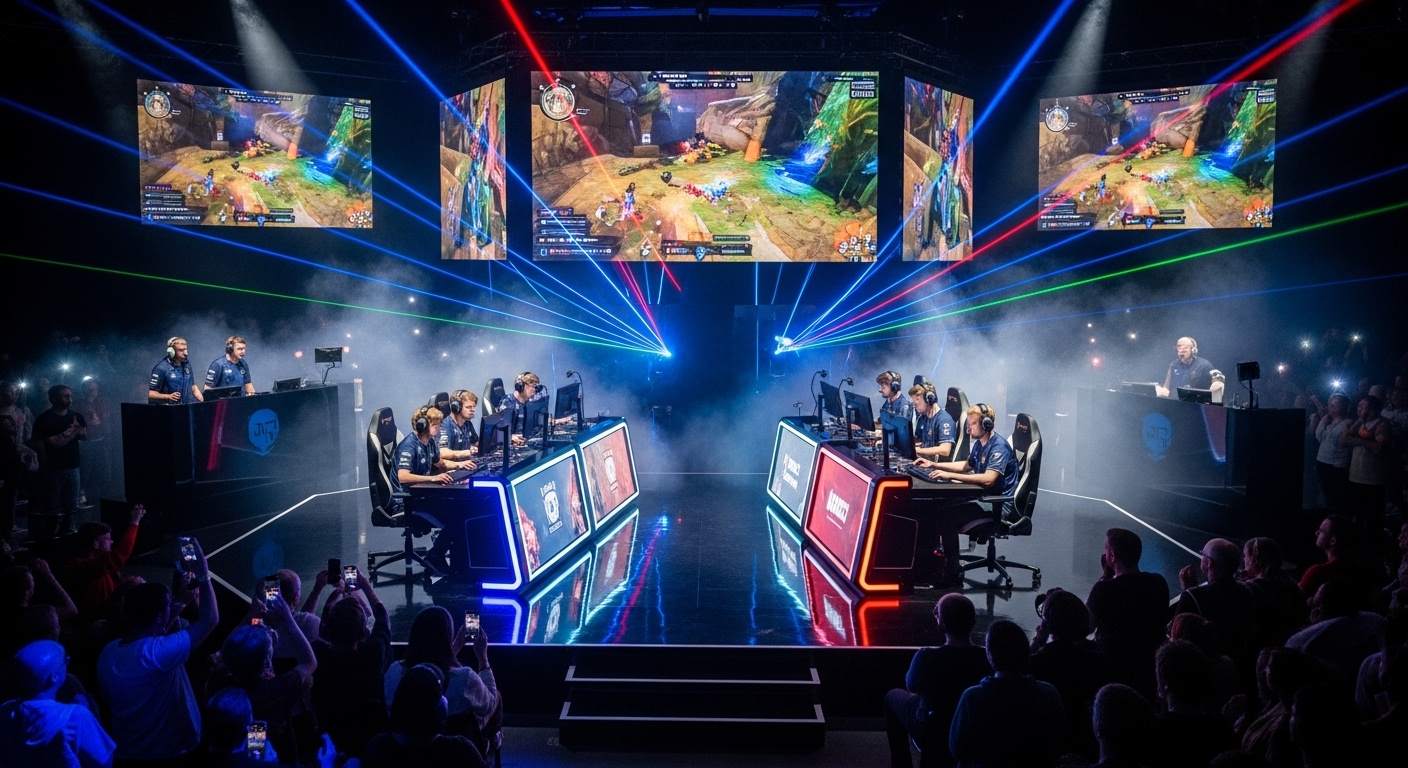
Esports, short for electronic sports, has gone through an incredible transformation over the past two decades. From being a niche hobby enjoyed by a small group of gamers to becoming a multi-billion-dollar global phenomenon, esports has become a force to be reckoned with. In fact, today, it has reached levels of popularity on par with traditional sports, with millions of fans tuning in to watch tournaments and games played by top professional gamers. This blog aims to take an in-depth look at the rapid rise of esports, its evolution, the current landscape, and what the future holds for this burgeoning industry.
The Birth of Esports: The Early Days of Competitive Gaming
Like many industries, esports has humble beginnings. The journey of competitive gaming started in the late 20th century, long before the glamorous tournaments and huge prize pools we see today. During the early years, gaming was largely a solitary pursuit, but as multiplayer gaming technology improved, players began to connect with each other in local networks, giving rise to what would become a major industry.
Local Area Networks (LAN) and the First Competitions
In the 1990s, the concept of playing multiplayer video games in the same room or on a local area network (LAN) became popular. These LAN parties were informal gatherings where friends would come together to play games like Quake, Warcraft II, and StarCraft. While these events were small and relatively unorganized, they laid the groundwork for larger competitive gaming events.
As gaming evolved and internet speeds improved, players began to compete with one another online. This was a major turning point, as it allowed gamers from different parts of the world to compete against each other. The first major online tournaments were held in the late 1990s, where games like StarCraft and Quake gained recognition as competitive games.
The Rise of Organized Esports Events
As the popularity of online gaming surged, so did the demand for organized esports tournaments. One of the first international esports tournaments was the Cyberathlete Professional League (CPL), which began in 1997. However, it was the introduction of events like the World Cyber Games (WCG) in 2000 and the Electronic Sports World Cup (ESWC) in 2003 that helped elevate competitive gaming to a global stage.
These events featured large cash prizes, and they attracted the attention of both players and fans. The growth of these tournaments signaled the potential for esports to become a mainstream industry.
Esports in the 21st Century: The Explosion of Online Competitions
By the mid-2000s, esports began to gain serious traction, thanks to a combination of technological advancements and a growing gaming culture. This period saw the birth of some of the most iconic esports titles that continue to dominate today.
The Emergence of League of Legends and Dota 2
In 2009, League of Legends (LoL) was released by Riot Games. The game’s accessibility, strategic depth, and constant updates made it a massive hit among both casual and competitive gamers. In the years following its release, LoL became a dominant force in the esports scene, with massive tournaments like the League of Legends World Championship drawing millions of viewers worldwide.
Another game that helped shape the esports landscape was Dota 2, developed by Valve Corporation and released in 2013. Known for its complex mechanics and high skill ceiling, Dota 2 attracted a large competitive following, and the annual International tournament became one of the most prestigious events in esports, offering prize pools that rival those of major traditional sports tournaments.
Both League of Legends and Dota 2 helped propel esports into the spotlight, with their global reach and enormous fanbases. The combination of engaging gameplay and the opportunity to watch the best players battle for supremacy created an incredibly engaging experience for viewers.
The Growth of First-Person Shooters (FPS)
While MOBAs (Multiplayer Online Battle Arenas) like LoL and Dota 2 gained massive popularity, esports was also evolving in other genres. Counter-Strike: Global Offensive (CS:GO), released in 2012, emerged as a titan in the FPS (First-Person Shooter) category. With its tactical gameplay, emphasis on teamwork, and high skill ceiling, CS:GO quickly became one of the most popular esports titles in the world.
FPS games have a unique appeal due to their fast-paced action and the skill required to succeed. CS:GO tournaments, such as ESL Pro League and DreamHack Masters, attract millions of viewers each year, and professional teams such as Astralis and Natus Vincere have become household names in the esports world.
The Esports Ecosystem: Teams, Sponsors, and Fans
Esports today is not just about the games themselves—it’s a highly organized industry that involves professional teams, sponsorship deals, broadcasters, event organizers, and a global community of fans.
Professional Esports Teams and Players
At the core of esports are the professional players who dedicate their lives to mastering their craft. These players practice for hours each day, honing their skills in specific games. Esports teams are similar to traditional sports teams, with players competing under the banner of well-known organizations like Team Liquid, Cloud9, Fnatic, and G2 Esports.
These teams often sign contracts with major gaming organizations, which include sponsorship deals and team branding. Professional players are paid salaries, receive prize money from tournaments, and often have additional income from streaming and brand partnerships. Some top-tier esports athletes earn millions of dollars annually, making esports a highly lucrative career for those who rise to the top.
The Role of Sponsors and Advertisers
The rapid growth of esports has attracted sponsorship from major global brands. Companies from a variety of industries—such as technology, beverages, automotive, and telecommunications—have realized the immense value in aligning with esports. Brands like Red Bull, Monster Energy, and Intel have become synonymous with esports events, sponsoring tournaments, players, and teams.
These sponsorships provide esports organizations with the financial support necessary to fund their operations and prize pools. Additionally, sponsors benefit from the opportunity to reach millions of young, tech-savvy consumers who are highly engaged in the gaming world.
The Fanbase: A Global Community
Esports wouldn’t be what it is today without its dedicated fanbase. Fans are not just passive viewers; they actively participate in the ecosystem through social media interactions, online discussions, and event attendance. Live streaming platforms like Twitch and YouTube Gaming have made it easier for fans to watch their favorite players and teams compete in real time.
The fan experience extends beyond watching the matches. Esports fans often engage with players on social media, purchase team merchandise, and attend live events such as the League of Legends World Championship or The International (Dota 2). Esports has developed a unique culture that is deeply connected to its fanbase, creating a sense of community that is rarely seen in traditional sports.
The Future of Esports: Innovations and Emerging Trends
As the esports industry continues to evolve, several trends and innovations are shaping its future.
Mobile Gaming: The Next Frontier
Mobile gaming is growing at an exponential rate, especially in emerging markets such as Asia and Africa. Games like PUBG Mobile, Free Fire, and Clash Royale have gained immense popularity, and mobile esports tournaments are becoming a fixture in the global scene. Mobile esports is particularly appealing because of its accessibility—players do not need high-end PCs or consoles to compete. As smartphone penetration increases worldwide, mobile esports will likely continue to rise in prominence.
Esports Integration with Traditional Sports
As esports gains mainstream recognition, traditional sports leagues are beginning to take notice. Major sports organizations like the NFL, NBA, and FC Barcelona have invested in esports teams and leagues. The blending of traditional sports and esports is helping to legitimize esports as a mainstream entertainment medium. It also opens the door to new forms of hybrid sports, such as virtual sports leagues, which combine the physical aspects of traditional sports with the competitive gaming of esports.
Virtual Reality (VR) and Augmented Reality (AR)
One of the most exciting developments in the world of esports is the integration of virtual reality (VR) and augmented reality (AR) technologies. VR gaming allows players to immerse themselves in digital worlds, creating an entirely new competitive experience. Imagine watching an esports tournament where the action takes place in a fully interactive virtual environment. While still in its infancy, the potential for VR and AR in esports is immense, and it could revolutionize how we experience competitive gaming in the future.
Conclusion: Esports as a Cultural Force
Esports has come a long way since its early days as a hobby for passionate gamers. Today, it is a billion-dollar industry with a global following, and it shows no signs of slowing down. The growth of esports has brought together players, teams, sponsors, and fans in a way that few other industries have. It has transformed the way we view gaming, turning it into a legitimate form of entertainment that rivals traditional sports.
Looking to the future, the possibilities for esports are limitless. From mobile gaming to VR, the innovations on the horizon will continue to shape the competitive gaming landscape. As esports continues to grow, one thing is certain: it will continue to captivate millions of fans around the world, pushing the boundaries of what we thought was possible in the world of gaming.